Chouara tannery in Fes, Morocco: how to visit
How to visit the Chouara tannery in Fes, Morocco: finding it, the leather shop terraces, the mint for the smell, touts, best time to go and what to expect.
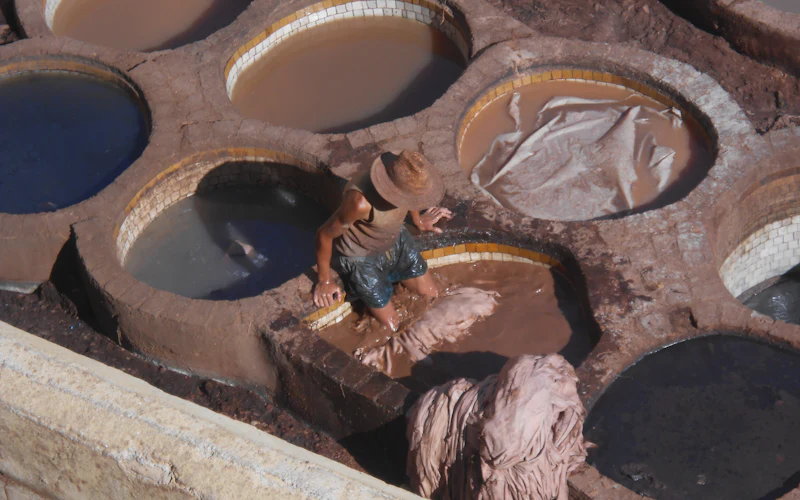
The Chouara tannery is the picture most people have in mind before they come to Fes: a grid of round stone pits full of dye, hides drying on the rooftops, and men working barefoot between the vats. It is one of the oldest tanneries in the city and it is still working, which is why it is worth seeing and also why it smells.
We take guests to Chouara most days on our Fes walks. Here is how the visit actually works.
Where it is and how to find it
Chouara is in the heart of Fes el-Bali, the old medina, near the Saffarine (brass workers’) square and the Quaraouiyine. Walking from Bab Boujloud takes a while because of the winding lanes, and it is downhill on the way in.
Finding it is the easy part. As you get close, several people will start to tell you “tannery, this way”. Some are shop staff, some are freelancers who earn a commission for bringing you to a particular terrace. Nobody needs to lead you, but if you are lost, following the signs for the leather shops (“tannerie”) or simply your nose will get you there.
If you would rather not deal with any of this, a guide makes it simple. Chouara is one of the stops on our Fes medina guided tour, which is on request at the moment while we confirm the final details.
The shop terrace model, explained fairly
You cannot buy a ticket for the tannery. The pits are surrounded by multi-storey leather shops, and the shops have terraces that look straight down onto them. That is the viewing platform.
It works like this:
- Someone from the shop meets you at the door and walks you up through floors of bags, jackets, babouche slippers and poufs.
- You are given a sprig of mint and led onto the terrace. Someone usually explains the process.
- On the way down, you walk back through the shop and are invited to look and buy.
There is no obligation to buy. The shops let you up because some visitors do buy, so expect a sales pitch and be relaxed about saying no. If you take nothing, a small tip to the person who showed you the terrace is normal and fair. They spent time with you.
Different terraces give different angles. Some are higher, some closer. If the first one is crowded, you can try another.
The smell, and the mint
The tanning process uses things that smell strongly, and on a hot afternoon it is noticeable from a few lanes away. The shops give out fresh mint for exactly this reason. Crush the leaves a little and hold them under your nose.
Most people find the first minute the worst. After that you get used to it. If you are sensitive to smells or pregnant, go early in the day and keep the visit short.
What you are looking at
The leather is worked in stages. Fresh hides go first into the white pits, where they are soaked to clean them and to loosen hair and flesh. Tanners traditionally use mixtures that include lime and pigeon droppings for this. After that the hides go into the coloured pits for dyeing.
Colours have traditionally come from natural sources. Guides will often point out things like poppy for red, indigo for blue and henna for orange. Some dyes today are synthetic, and the shop staff will tell you their version. Take the details as the local explanation rather than a chemistry lesson.
The hides then dry on the rooftops and walls in the sun before they are cut and sewn in the workshops around the medina.
The work is hard and physical, and the men in the pits are in the middle of their working day. Take photos from the terrace by all means, but do not shout down to them or throw anything.
When to go
Mid-morning is our usual choice. The tanners are busy, the pits are full and the light gets into them. By late afternoon the activity often winds down. Friday can be quieter, and some workshops close for part of the day, so check if your visit falls on a Friday.
Rain does not stop the tannery, but it makes the lanes slippery and the rooftops less interesting.
Shopping for leather
If you want to buy, this is a reasonable place to do it, as long as you treat it like any souk.
- Bargaining is expected. Start well below the first price and meet somewhere in the middle.
- Check the stitching, the zips and the lining.
- Smell the item. Well-finished leather should not carry the tannery smell home with you.
- Never feel rushed. You can always come back after comparing other shops.
Common traps around the tannery
Most people we meet have a good time at Chouara. A few get a worse experience, usually in one of these ways:
- Someone tells you “the tannery is closed today” and offers to take you to a different one. Chouara is a working site and is rarely closed in daytime. Politely ignore it.
- A helpful stranger walks you there and then asks for more money than the walk was worth. Decide what is fair before you accept help, or say “no thank you” at the start.
- You are taken to a shop with a poor view. If the terrace is disappointing, you can leave and try another.
None of this is dangerous. It is irritating, and it is easy to handle once you know how it works.
Pairing the tannery with the rest of Fes
Chouara is a short walk from the Al Attarine Madrasa and the Quaraouiyine, so it fits easily into a morning in the medina. For the bigger picture, go up to Borj Nord in the afternoon and look back over the rooftops. Our Fes ramparts panoramic tour is a private half-day drive around the walls and viewpoints, from 46 € for one to three people. We also list more ideas in our guide to things to do in Fes.
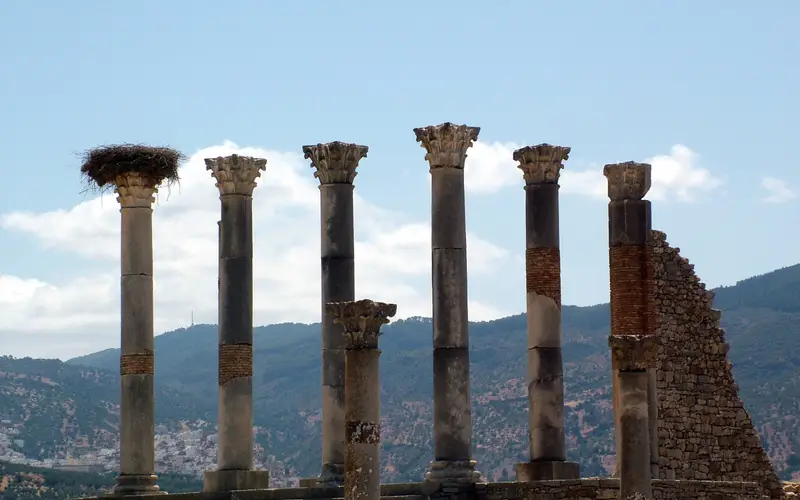
If you have an extra day, the Volubilis, Moulay Idriss and Meknes day trip gets you out of the city to the Roman ruins, from 104 € for one to three people.
Plan the tannery for a mid-morning, bring some small change for a tip, and wear shoes you do not mind getting a little dirty. If you want a guide for the medina, send us your dates and we will confirm what we can arrange.
Frequently asked questions
Is there an entrance fee for the Chouara tannery?
There is no ticket office. You watch from the terraces of the leather shops around the tannery. Entry to the terrace is usually free, on the understanding that you will look around the shop. If you buy nothing, a small tip to the person who showed you up is polite.
Does the Chouara tannery smell bad?
Yes, it can be strong, especially on warm days. Shops hand out sprigs of fresh mint to hold under your nose. Most people get used to it after a few minutes.
What is the best time to visit the tannery in Fes?
Mid-morning is usually best. The tanners are working, the dye pits are full of colour and the light reaches into the pits. Late in the day there is often less activity.
Can I go down into the tannery pits?
Visitors watch from the terraces. The pits are a working site with slippery stone, chemicals and men carrying heavy hides, so it is not a place to wander into.